
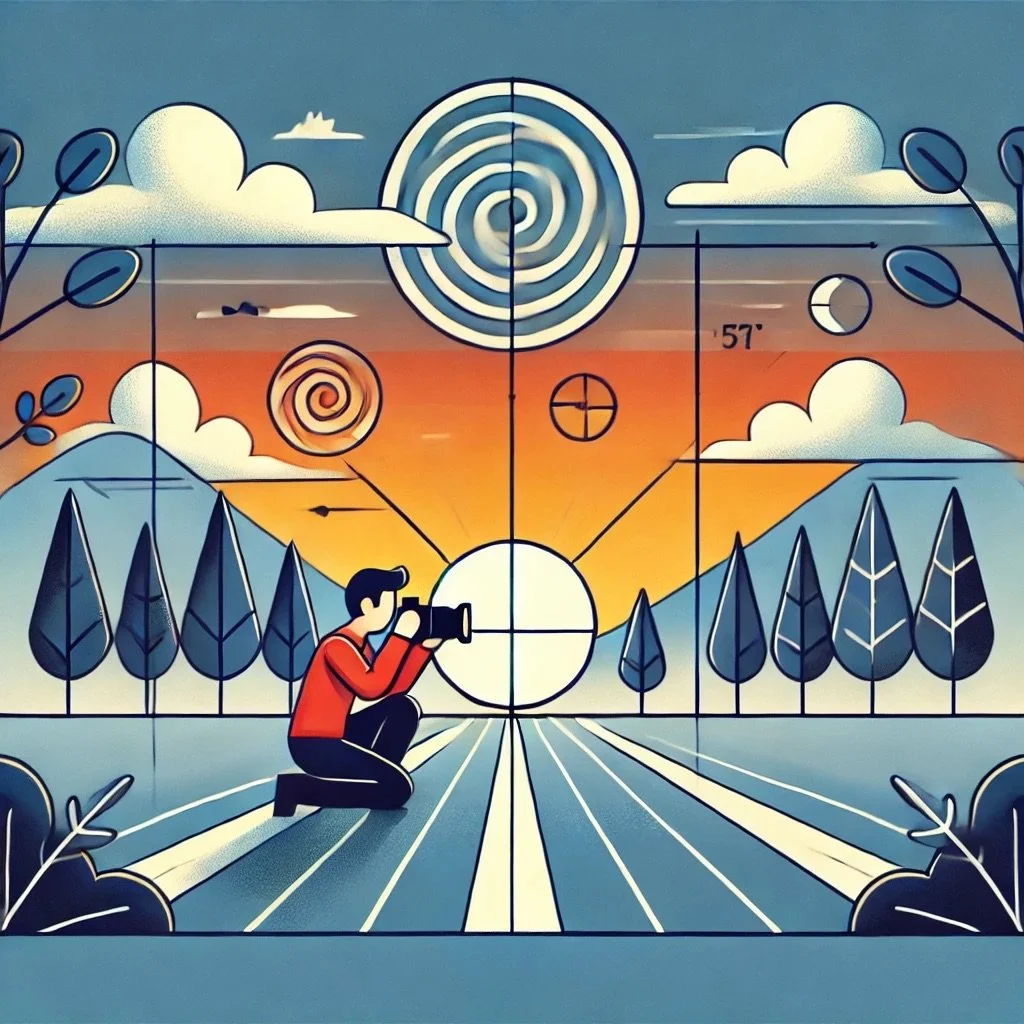
Mastering Composition in Photography: The Key to Powerful Images
Mastering composition is essential for creating visually compelling photographs. Learn about the key rules, including the Rule of Thirds, Leading Lines, and Simplification, to elevate your photography. Discover how these techniques can transform your images from ordinary to extraordinary.
Composition is one of the most important elements of photography, yet it’s often overlooked by beginners and even some experienced photographers. In photography, composition refers to the arrangement of elements within a frame, creating a visually compelling and balanced image that captures the viewer’s attention. It’s what makes a photo feel natural, balanced, and engaging, even if the viewer can’t quite put their finger on why.
As famed photographer Edward Weston once said, “Composition is the strongest way of seeing.” It’s not just about what you shoot, but how you arrange the elements in the scene. The way you compose an image can turn a simple subject into a masterpiece. So, what are the essential rules of composition, and how can you use them to elevate your photography?
Let’s dive into the fundamental principles and rules of composition that every photographer should know.
1. The Rule of Thirds
One of the most well-known and widely used composition techniques in photography is the Rule of Thirds. It involves dividing your frame into a grid of nine equal parts by drawing two vertical and two horizontal lines. The idea is to place the most important elements of your photo along these lines or at their intersections, rather than centering your subject.
This technique is so effective because it aligns with how our eyes naturally move across an image. When the subject is placed off-center, it creates a sense of balance and allows the viewer’s eye to explore the entire frame.
How to Use It:
Position your subject where the lines intersect.
For landscapes, place the horizon along the top or bottom third line instead of the middle of the frame.
This rule works well for portraits, landscapes, and street photography.
Pro Tip: You don’t have to follow the Rule of Thirds religiously. It’s a guideline, not a hard rule. Once you’re comfortable with it, try breaking it for more creative compositions.
2. Leading Lines
Leading lines are visual elements that guide the viewer’s eye through the photograph, usually toward the main subject. These lines can be anything—roads, rivers, fences, or even shadows. The goal is to draw attention to the focal point of the image while creating a sense of depth.
How to Use It:
Look for natural or man-made lines that lead toward your subject.
Roads, pathways, railings, and rivers are common examples of leading lines in landscape photography.
Leading lines can start at the bottom of the frame and move toward the subject, pulling the viewer’s eyes into the scene.
Pro Tip: Leading lines don’t have to be straight. Curved or diagonal lines can create a more dynamic and interesting composition.
3. Symmetry and Patterns
Symmetry and patterns can create stunning compositions that are pleasing to the eye. Symmetrical images, where one half of the frame mirrors the other, evoke a sense of balance and harmony. Patterns, whether natural or man-made, can add visual interest and make an image feel more organized and structured.
How to Use It:
Look for reflections in water, glass, or other surfaces to create symmetry.
Use patterns found in architecture, nature, or repeated elements to add structure to your images.
Symmetry works well for architectural and landscape photography, but it can also be effective in portraits and close-up shots.
Pro Tip: Break the symmetry intentionally by introducing an element that disrupts the perfect balance. This contrast can make your image more interesting.
4. Simplification and Exclusion
One of the most effective ways to create a powerful image is to Simplify and Exclude unnecessary elements from the frame. By removing distractions, you can direct the viewer’s attention to the most important parts of the image.
How to Use It:
Identify the main subject of your image and eliminate any elements that don’t support it.
Move closer to your subject, change your angle, or zoom in to focus on the essentials.
The fewer elements in the frame, the stronger the impact of your photo.
Pro Tip: Keep practicing simplification in every shot you take. As you become more experienced, you’ll start to notice distractions in the frame more easily and adjust your composition accordingly.
5. Framing
Framing is a technique where you use elements within the scene to create a natural border around your subject. This can be anything from doorways, windows, trees, or arches that help direct the viewer’s attention to the focal point. Framing adds depth to the image and makes the subject stand out.
How to Use It:
Position your subject within a natural frame like a doorway, window, or arch.
Use elements in the foreground to create a frame around your subject and add depth.
Framing works well for portraits, street photography, and architectural shots.
Pro Tip: Don’t limit yourself to traditional frames. Experiment with less obvious elements like shadows, foliage, or even out-of-focus foreground objects to create unique frames.
6. Balance and Symmetry
Balance in composition refers to distributing visual weight across the image so that no one part feels too heavy or overwhelming. A well-balanced photo feels harmonious, even if the elements aren’t perfectly symmetrical.
There are two types of balance:
Symmetrical Balance: Both sides of the image have similar elements and visual weight.
Asymmetrical Balance: Different elements on each side of the frame are balanced in a way that one side doesn’t overpower the other.
How to Use It:
Pay attention to the visual weight of elements in your image. A large object on one side can be balanced by a smaller object on the other.
Asymmetrical balance can create a more dynamic and visually interesting photo.
Pro Tip: Use color to balance your composition. A bright color in a small area can balance a larger neutral space.
7. Fill the Frame
Sometimes, the best way to create a striking image is to fill the frame with your subject, leaving no empty space around it. This technique eliminates distractions and emphasizes the subject. It works especially well for portraits, macro photography, and abstract shots.
How to Use It:
Move closer to your subject or zoom in until it completely fills the frame.
Make sure there’s no unnecessary background space that takes away from the subject.
Pro Tip: Filling the frame can also create a sense of intimacy, especially in portrait photography, where the viewer feels closer to the subject.
8. Depth of Field and Layering
Creating a sense of depth in your image makes it more engaging and lifelike. Depth of field refers to how much of the scene is in focus, and you can use it to separate your subject from the background or include multiple layers of interest in the frame.
How to Use It:
Use a shallow depth of field (a low f-stop) to blur the background and make the subject stand out.
For landscapes, use a deep depth of field (a higher f-stop) to keep everything in focus, from the foreground to the background.
Pro Tip: Layer your composition by including elements in the foreground, middle ground, and background to create depth and dimension.
9. Negative Space
Negative space is the empty space around your subject. It can be just as important as the subject itself, providing breathing room and allowing the main subject to stand out. Negative space simplifies the composition and adds a sense of minimalism.
How to Use It:
Intentionally leave space around your subject to emphasize it.
Use negative space to create a calm, uncluttered image.
Negative space can be sky, water, walls, or any other large, empty area.
Pro Tip: Negative space works especially well in minimalist photography, where the subject is isolated and the simplicity of the scene is the point.
10. Golden Ratio and Fibonacci Spiral
The Golden Ratio is a mathematical ratio often found in nature that has been used in art and design for centuries. The Fibonacci Spiral is a visual representation of the Golden Ratio, and it helps create balanced and aesthetically pleasing compositions.
While the Rule of Thirds is a simplified version, the Golden Ratio can lead to more complex, but equally harmonious, compositions.
How to Use It:
Use the Fibonacci Spiral to guide where you place key elements in your frame.
Align the most important parts of the image along the spiral’s curve for a more organic and natural composition.
Pro Tip: Most cameras and editing software allow you to overlay the Fibonacci Spiral on your image to help with composition.
Breaking the Rules
As with any set of guidelines, the rules of composition are meant to be broken—once you’ve mastered them. The best photographers understand these principles deeply but are also comfortable bending or breaking the rules when the scene calls for it. Sometimes, a centered subject or a chaotic, asymmetrical composition can create a more powerful or unexpected image.
Conclusion: Composition is the Key to Great Photography
Composition is the foundation of great photography. Whether you’re following the Rule of Thirds, using leading lines, or experimenting with symmetry, these techniques will help you create images that are more visually compelling and memorable. As you practice and become more familiar with these rules, you’ll start applying them instinctively—and, eventually, breaking them to create truly unique compositions.
In the end, composition is all about telling a story with your images, guiding the viewer’s eye, and creating a sense of balance and harmony. By mastering these rules, you’ll be well on your way to capturing photos that stand out and make a lasting impact.
Our Services
What makes the photo of a lifetime?
A photography masterpiece transports the viewer to another place, engaging their imagination and making them feel something powerful. Learn how to create images that tell stories, focusing on the fundamentals of composition, light, and color.
It’s strange to think about, but some of the most powerful, immersive experiences don’t come from photography or movies—they come from music. A great song doesn’t just make you feel something, it takes you somewhere else. Close your eyes while listening to a powerful piece of music, and suddenly you’re in a different world. You can almost smell the air, feel the sun, and experience emotions that weren’t there before the first note played.
But photography? No matter how beautiful or well-composed, a photograph is confined by its frame. Even when you stand in front of a stunning landscape photograph, you’re still aware that you’re in a gallery or looking at your screen. It’s only when you stumble upon something truly special—a masterpiece—that a photograph can break those boundaries and pull you into another reality.
What Separates a Masterpiece from a Great Photo?
A great photo might catch your eye for its technical brilliance or vibrant colors, but a masterpiece goes beyond that—it creates a full experience. It’s like stepping into another world, even if just for a moment. A masterpiece pulls you into its universe and makes you feel like you’re living inside the image.
I remember one time, flipping through an old National Geographic magazine, when I stopped dead in my tracks. It was a photograph of a crowded street in India, with bright colors exploding from every corner. The image was chaotic, yet perfectly balanced. I could feel the heat of the sun, hear the honking cars and buzzing crowds, and smell the food vendors on the street corners. For a moment, I was no longer sitting at my desk—I was right there in the middle of that street, thousands of miles away.
That’s the power of a masterpiece. It doesn’t just ask you to look at it—it transports you.
How to Create Your Own Masterpiece
So, how do you create a photograph that takes someone somewhere else? A masterpiece isn’t just about technical skill or having the right equipment—it’s about engaging your viewer’s imagination. You need to pull them into your world and make them feel something powerful.
Let’s think about it like this: Imagine you’re shooting a forest in the early morning, with mist hovering just above the ground. Anyone could snap a shot and show the forest for what it is. But to create a masterpiece, you have to go deeper. Maybe you focus on the interplay between the light filtering through the trees and the soft mist swirling at their feet. Perhaps you capture the way the damp leaves catch the sunlight in tiny droplets, creating a shimmering path that draws the viewer in. Your goal is to make them feel the cool morning air, to hear the silence of the forest, and to get lost in the serenity of the scene.
It’s the same with street photography. A photo of a busy city intersection is just that—an intersection. But if you wait for the perfect moment when the light hits the wet pavement just right, or when a single person walks through the frame, oblivious to the rush of traffic and people, suddenly, you’re telling a story. And stories are what make masterpieces.
Image Fundamentals: The Foundation of a Masterpiece
No masterpiece exists without structure. The fundamentals of any great image—shapes, colors, lines, and balance—are the building blocks of success. Composition is the foundation of every masterpiece, and without it, even the most dramatic or colorful image falls flat.
Let’s take the example of a photo I saw recently of a surfer catching a wave at sunset. The photo wasn’t technically perfect—the surfer was slightly out of focus—but that didn’t matter. The composition was flawless. The line of the wave led the viewer’s eye straight to the surfer, and the golden glow of the setting sun painted the scene in warm, inviting colors. Even as a thumbnail, the image popped. It didn’t need razor-sharp detail to have an impact; the composition did all the heavy lifting.
That’s the secret to creating an image that grabs attention from across the room—it’s not the little details, but the big shapes and how they work together. It’s the way the light and shadows interact, the contrast between warm and cool colors, and the overall balance of the scene. If your photo works as a thumbnail, it’ll work at any size.
Engage the Viewer’s Imagination
If you want to create a masterpiece, your image can’t be passive. It needs to pull the viewer in, stop them in their tracks, and make them feel something. Think about the last time a photo really grabbed your attention. Was it because of the technical perfection, or was it because it told a story?
I remember a photo I saw in a small coffee shop gallery. It was a black-and-white image of an old man sitting alone at a table, staring out of a rain-streaked window. The photo didn’t show much, but there was something about the composition—the way the light fell softly on his weathered face, the shadowy reflection in the window—that made me wonder about his life, his thoughts, his stories. I stood there for what felt like hours, lost in the photo’s quiet, melancholy world.
That’s the power of a masterpiece. It doesn’t just show you something—it makes you feel something.
Details Are Secondary to Structure
When creating an image, don’t get caught up in the details too early. Focus first on the big picture—the overall composition, the balance of light and shadow, the placement of your subjects. Once those fundamentals are in place, you can fine-tune the details. But remember, it’s the structure that makes the image work, not the minute details.
Think of it this way: a photograph of a tree at sunset might be sharp and full of detail, but if the composition is off, the viewer won’t be engaged. On the other hand, a photo where the tree is perfectly placed in the frame, bathed in golden light, with a sense of balance and harmony, will pull the viewer in—even if some of the finer details aren’t perfect.
Masterpieces Are Designed, Not Stumbled Upon
Great photos don’t just happen—they’re designed. Even in a fast-moving environment, you can control the elements within your frame. Street photographers are masters at this. They might spend hours in the same spot, waiting for the perfect combination of light, movement, and subject to come together. They know that the difference between a good shot and a masterpiece is often a matter of timing, positioning, and patience.
For example, I once read about a photographer who spent an entire day in one alleyway in Paris, waiting for the light to hit the buildings just right. When it finally did, a woman in a red coat walked into the scene, and everything came together in a single, perfect moment. That photo went on to win multiple awards—not because of luck, but because the photographer had the vision and patience to wait for the masterpiece to unfold.
Conclusion: How to Create Your Masterpiece
Creating a masterpiece in photography isn’t about having the best gear or capturing the sharpest details. It’s about mastering the fundamentals—composition, light, and color—and using those elements to transport the viewer to another place. It’s about telling a story that engages their imagination and makes them feel something they didn’t expect.
So next time you’re out with your camera, don’t just look for a good photo—look for a masterpiece. Focus on the big picture, wait for the right moment, and create something that will make your viewer say, “Wow, I’ve never seen the world like this before.”
Our Services
The Most Important Photography Lesson You’ll Ever Read
The key to creating great photography isn't about expensive gear—it's about mastering the basics of composition, light, and color. Learn how to see differently and capture stunning photos that stand out, whether you're using a phone or a professional camera. Discover the secrets to creating images that truly wow.
This is the most critical article on photography you'll ever come across. Why? Because it explains the fundamentals that separate a good photo from a great one. In a world where anyone can pick up a camera and take a decent picture, few understand what really makes a photograph exceptional.
It’s easy to rely on modern technology—just set your camera to AUTO and shoot away. But here’s the problem: even with the most advanced cameras, without the right fundamentals, your photos will lack impact.
Photography, at its core, is an art. But unlike painting, where you’re forced to study structure and composition, photography allows you to bypass formal training. That’s why many people who snap photos—even professionals—often overlook the most critical elements of a successful image: structure, light, color, and composition.
In this article, I’ll teach you how to think about your photos differently, to focus on the foundational aspects that make people go "Wow!" before they even notice the details. Once you master this, your photos will stand out—whether you're shooting on a basic camera or a high-end DSLR. You’ll no longer be distracted by technical details, and instead, you’ll focus on what really matters: creating a photograph that speaks to people.
The Fundamentals of Great Photography
The secret to creating powerful photographs isn't hidden in complex camera settings or technical jargon. It lies in the structure of the image. Every successful photo has a foundation of strong composition, bold shapes, contrasting colors, and thoughtful use of light and shadow.
Without structure, a photograph will look flat and uninteresting, no matter how technically perfect it is. Strong photos grab attention from a distance, pulling viewers in before they even see the fine details. These foundational elements are what make people stop and take notice.
Let’s break down these fundamentals:
1. Composition: The Foundation of a Strong Image
Every image you take should have a clear, organized composition. Think of it as the skeleton of your photo. Without a strong underlying framework, the rest of the image doesn’t matter. A well-composed photograph will guide the viewer’s eye naturally through the frame, leading them to the most important parts of the picture.
Composition is about balance and proportion. It’s about arranging the elements in your frame so that they work together, creating harmony. The key is to make sure that your composition stands out even when viewed from a distance. If it doesn’t pop as a thumbnail, it won’t impress as a full-size image.
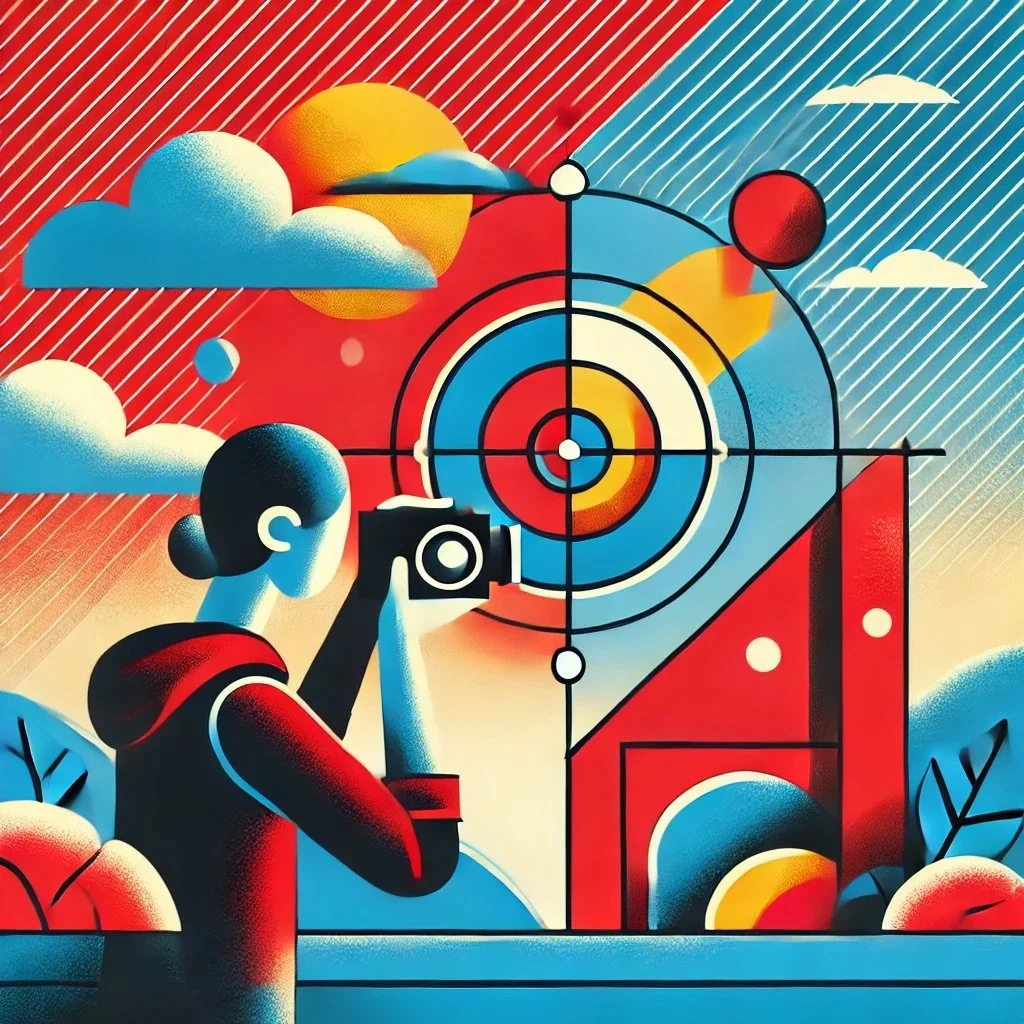
For example, take a look at one of my award-winning photographs: it features a bold red shape set against a muted blue-gray background. The composition is simple but powerful. The large red object in the center acts as the anchor, while the blue-gray area around it serves as negative space, emphasizing the central focus. The contrast between the colors and the placement of the shapes is what makes this photo compelling.
2. Color and Contrast: The Silent Storytellers
Colors aren’t just decorative—they are essential tools for drawing attention and evoking emotion. Warm colors like red, orange, and yellow jump out at the viewer, while cool colors like blue and green recede into the background. By playing with these colors, you can create depth and dimension, making a two-dimensional image appear three-dimensional.
Think about this: if my image above had been black and white, the red and blue would have blended into similar shades of gray, losing the punch that the vibrant colors provide. The eye is drawn first to the brightest, boldest color—so it’s crucial to use color strategically to direct the viewer’s attention.
Contrast, whether through color or light and shadow, is another key factor. A well-placed highlight can direct attention to the most important part of your image, while a darker corner can subtly guide the viewer’s eye away from distractions.
3. Light: The Defining Factor
Lighting is everything in photography. It creates depth, highlights texture, and defines shapes. Good lighting can make or break an image. Many amateur photographers overlook how critical it is to pay attention to light. Whether you're shooting a dramatic portrait or a simple landscape, the way light interacts with your subject is the most important technical factor.
The direction and quality of light can completely transform a scene. Side lighting can emphasize texture, while soft lighting can create a gentle, flattering mood. Always look for interesting light before you even think about taking the photo. If the light isn’t right, the photo won’t be either.
This is why some of the most stunning photos are taken during the "golden hour"—the hour just after sunrise or just before sunset when the light is soft, warm, and directional. In this type of lighting, colors appear more vibrant, and shadows create interesting contrasts, adding depth to your composition.
4. Focus on Shapes and Forms, Not Details
When composing your shot, think of the big picture first. Details are secondary. What really grabs attention are the bold shapes and forms in your image. These are the elements that make your photo stand out from across the room.
Even mundane subjects, like a door or a trash can, can become compelling when they’re used to create strong shapes and forms in your composition. The key is to stop thinking about objects as "things" and start thinking of them as shapes, lines, and colors. This mindset shift will help you see creative opportunities everywhere.
For example, in one of my favorite shots, I photographed an abandoned building. The actual subject wasn’t exciting, but the bold red wall against the blue sky created a strong visual contrast that made the image pop. It wasn’t about the subject—it was about the shapes and colors.
5. Simplicity: Less Is More
One of the biggest mistakes photographers make is trying to include too much in one image. The best photos are often the simplest ones. When composing your shot, ask yourself: "Does this element add to the story?" If not, leave it out.
A cluttered image can confuse the viewer, making it hard for them to know where to look. But a clean, well-composed photo guides the eye smoothly through the frame, creating a satisfying experience for the viewer.
The Secret to Great Photos Isn’t Your Gear
Here’s the big secret: it’s not about the camera. You don’t need the latest, most expensive gear to take amazing photos. If you understand composition, color, and lighting, you can take stunning photos with any camera—even your smartphone.
Too often, photographers fall into the trap of thinking that better equipment will make them better photographers. But here’s the truth: a great photo starts with the photographer’s eye, not the camera.
Unlock Your Full Potential: Start Seeing Differently
Once you understand these fundamentals, you’ll start seeing the world differently. You’ll notice how colors interact, how light shapes objects, and how composition can tell a story. You’ll no longer focus on the technical details, because you’ll be creating images with strong foundations that speak for themselves.
Take Your Photography to the Next Level
Now that you’ve learned the basics, it’s time to start applying them. Experiment with composition, pay attention to lighting, and focus on the structure of your images. Whether you’re shooting with a DSLR, a film camera, or just your phone, these principles will help you take photos that stand out from the crowd.
And if you're looking for gear or services to support your photography journey, don’t forget to check out our wide selection of used cameras, passport photos, film developing, and DVD transfers. The right tools are important, but remember: the best camera is the one you have with you.
Our Services
What Makes a Photograph Truly Great?
Photography is more than just snapping pictures—it’s about vision and creativity. Forget about following rules or analyzing gear, and start seeing the world like an artist. Learn how art classes and a fresh perspective can help you capture stunning, meaningful images. Start creating today with what you know and love!
Good photography isn’t just about taking a picture—it’s art. And real art doesn’t just copy reality; it expresses the artist’s imagination. The best photographs aren’t just images, they’re stories—capturing the emotions and vision that inspired the photographer to hit the shutter.
Forget about formulas or rules like the Rule of Thirds. Sure, following the “rules” might get you a decent picture, but true artistry goes beyond that. Look at legendary artists like Mondrian. He started with traditional landscapes, but over time, he broke the rules and developed his own abstract style. Photography is no different—you have to learn to see the world in your own unique way.
Trying to mimic another photographer’s style won’t get you there. Photography isn’t about copying; it’s about creating something original. Just like in music, using the same notes won’t magically recreate the magic of your favorite song. You have to dig deeper and bring out your own voice.
Want to start seeing like an artist? Skip the typical “photography” classes and sign up for art classes instead. Local community colleges often offer practical, affordable classes where you can learn the basics of painting and drawing, and these are the skills that help you truly see and create your own style. It’s not about the camera settings or software—it’s about what’s in your frame. Your phone is more than enough to start; don’t even think about fancy gear until you’ve outgrown your phone’s limitations.
To develop your vision, you need to surround yourself with creative people. Instead of talking cameras and gear with photographers, head to local art galleries, meet the artists, and talk about what’s in their work, not just how they made it. That’s how you’ll get feedback that actually helps you grow as an artist.
Great photography is simple: shoot what you love, what excites you, and what you know best. Ansel Adams captured the beauty of the outdoors because that’s what he loved. For you, it might be something completely different. Whatever it is, let your passion guide you, and don’t worry about the technical stuff until you need to.
Ready to level up your photography skills?
If you’re excited to learn more, why not dive into our Free Photography Course? Whether you’re just starting out or you’ve been snapping photos for a while, this course will help you understand the fundamentals and take your photography to the next level. No fancy gear needed—just your passion and creativity. Join us and start creating the images you've always imagined!
Our Services
What Really Makes a Photographer?
What is Photography?
Photography isn't just about fancy cameras or perfect settings—it’s about vision. Whether you're a beginner or have been snapping photos for years, the true art of photography lies in how you see the world and bring your imagination to life. Discover how photographers, like painters, turn everyday moments into creative masterpieces. Ready to take your skills to the next level? Check out our free photography course and start creating the images you've always dreamed of!
When people talk about photography, they usually get caught up in discussions about gear—fancy cameras, sharp lenses, all the latest tech. But here’s the real deal: photography isn’t about the equipment. It’s about how you see the world and the stories you want to tell through your photos.
Think of photography like this: it’s your imagination brought to life. You picture something in your head, and with a little skill, you turn that vision into a photo. Anyone can learn the technical stuff—how to adjust brightness, play with color, or make sure an image is sharp. But the true magic? That happens before you even touch the camera. It’s all about seeing something unique, something others might miss, and figuring out how to bring that moment to life.
Photography and painting actually have a lot in common. Both let you take something from your imagination and turn it into something real. A painter starts with a blank canvas and creates a world from scratch. A photographer does something similar—they might start with the real world, but they manipulate light, color, and composition to craft something totally new. Both take practice and dedication to master.
The cool thing is, technology makes it super easy to get started. You can grab any camera, take a quick shot, and it’ll probably look decent. But to take amazing photos that make people stop and feel something? That’s about more than just pushing a button. You have to think about lighting, how colors interact, the mood you’re creating, and the story you’re telling.
And here’s a secret: you don’t need to follow any rules. Some of the best photographers break “rules” all the time—whether it’s playing with weird white balance settings or going for extreme exposure adjustments. It’s not about perfect technical accuracy. It’s about creating something that moves people, that captures a feeling or a moment in a way only you can.
A lot of people, especially beginners, think that getting the right gear will instantly make them better photographers. But the truth is, you could give a world-class photographer a cheap, basic camera, and they’d still create something incredible. Why? Because it’s not about the tools—it’s about how you see and what you do with those tools.
Want to get better at photography? Instead of obsessing over noise reduction or lens sharpness, study light and color. Look at how artists—especially painters—compose their work and play with lighting. The more you learn to see like an artist, the better your photos will become.
At the end of the day, photography is about imagination. It’s not about the medium you use; it’s about the story you tell. The camera is just a tool, like a paintbrush or a pen, to help you bring that story to life.
Ready to level up your photography skills?
If you’re excited to learn more, why not dive into our Free Photography Course? Whether you’re just starting out or you’ve been snapping photos for a while, this course will help you understand the fundamentals and take your photography to the next level. No fancy gear needed—just your passion and creativity. Join us and start creating the images you've always imagined!
Our Services